AI for Mathematics
Overview
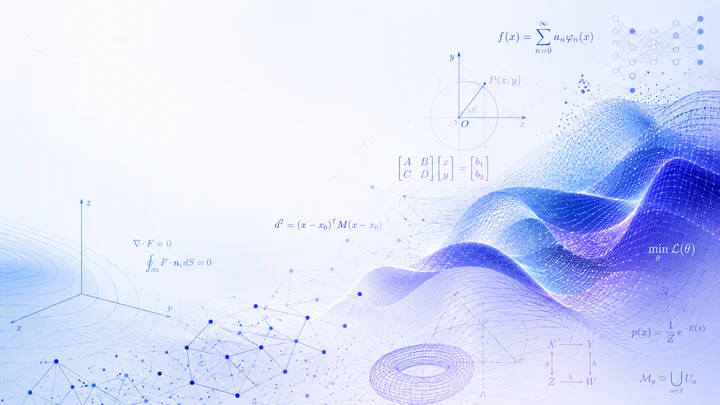
Mathematics is the most precise of the sciences, built on logical deduction and proof. The tools by which mathematicians explore, conjecture, and verify are now changing: powerful computation and modern AI are turning parts of mathematical research into a collaboration between human and machine. As an AI-research lab housed in a department of mathematics, this is our home ground.
A recurring keyword is representation, i.e. how mathematical objects should be encoded so that a modern AI model can show reasoning behavior, explainable AI aspects, faithfulness in semantics, and on. We have shown that numbers can be richly represented to deep neural networks using its p-adic expansions, and that a principled Fourier basis tied to prime structure gives a clean theoretical foundation to understand why language models struggle to learn modular arithmetics. We also studied how AI handles mathematical language before the advent of ChatGPT, using math word problems with non-numeric answers and customized tool-calling operations that modern AI services rely on to answer computation-related questions.
Core Questions
- How should numbers, structures, and proofs be represented so that models can reason about them faithfully rather than by surface pattern?
- Which mathematical tasks can AI genuinely assist, and where does it break down?
- How can computation, conjecture, and proof reinforce one another?
Representative Work
- Prime Fourier Embeddings: A Principled Basis for Modular Arithmetic — ICML 2026 AI for Math Workshop
- Numbers Already Carry Their Own Embeddings — NeurIPS 2025 MathAI Workshop
- Noun-MWP: Math Word Problems Meet Noun Answers — COLING 2022
See all work on the Publications page.
Related
- Logs tagged AI4Math · conjecture
- Events and talks on AI for mathematics
People
- Donghun Lee — Principal Investigator
- Suhyun Bae — number embeddings, modular arithmetic
- Taehun Cha — mathematical language and reasoning
See People for the full lab.
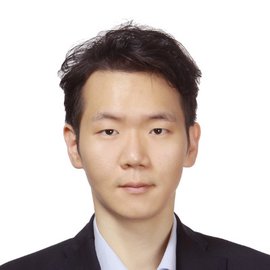
Donghun Lee
Associate Professor
Connecting artificial intelligence and mathematics, in both directions.